CJCJ Executive Director Daniel Macallair analyzes previously unavailable juvenile institutional records in My Grandfather Charles Manson.

Manson Was Created, Not Born
Daniel Macallair, executive director of the Center on Juvenile and Criminal Justice, will appear as a juvenile justice expert in the new Hulu documentary My Grandfather Charles Manson, beginning July 22.
The documentary follows Sophia Maddox as she investigates the life of her grandfather, Charles Manson, and considers one of the central questions surrounding his life: Was Manson’s later violence the result of hereditary factors, or was it shaped by the experiences and institutions that defined his childhood?
Macallair’s appearance was filmed at the former Indiana Boys School, where Manson was confined as a young person. In the documentary, Macallair reviews previously unavailable juvenile institutional records and explains their significance to Maddox.
The records provide a rare and detailed account of Manson’s childhood and adolescence before he became one of the most notorious figures in American history. They document his repeated placement in juvenile institutions, his movement between correctional settings, and his exposure to environments characterized by violence, instability, humiliation, abuse, and rejection.
Macallair’s analysis draws on more than 40 years of experience in juvenile and criminal justice. It also reflects his work on death penalty cases involving defendants who committed horrific acts after experiencing profound childhood trauma and severe abuse in juvenile institutions.
His central conclusion is that Manson was profoundly shaped by a callous, cruel and abusive juvenile system.
“Manson committed horrific crimes, and examining the forces that shaped him does not excuse those crimes or diminish the suffering of his victims,” Macallair said. “But if we are serious about understanding and preventing extreme violence, we must examine what happened to a child before asking only what that child later did. The records show that Manson was repeatedly exposed to institutional cruelty, violence, rejection, and degradation during critical stages of his development.”
Explaining Violence Does Not Excuse It
CJCJ’s participation in the documentary is not intended to rehabilitate Manson’s public image or minimize his responsibility. Rather, it reflects the organization’s longstanding position that meaningful public safety requires an honest examination of how children are treated and affected by the institutions entrusted with their care.
Explaining the development of violent behavior is not the same as excusing it. Accountability for serious harm can coexist with an investigation of the personal, social, and institutional conditions that contributed to that harm.
The previously unavailable records examined in the documentary help move the discussion beyond generalized claims that Manson was inherently evil or genetically predisposed to violence. They offer documented evidence of what he experienced as a young person and how juvenile institutions responded to his behavior, vulnerability, and need for care.
The records reveal a system that relied heavily on punishment, confinement, coercion, and rejection. Instead of providing stability and rehabilitation, the institutions repeatedly exposed Manson to conditions that could intensify trauma, distrust, aggression, and alienation.
This does not mean that every child who experiences institutional abuse will become violent. The overwhelming majority do not. Nor does it mean that institutional abuse alone explains every aspect of Manson’s later conduct. It does mean that his development cannot be understood without examining the public systems that exercised extensive control over his childhood.
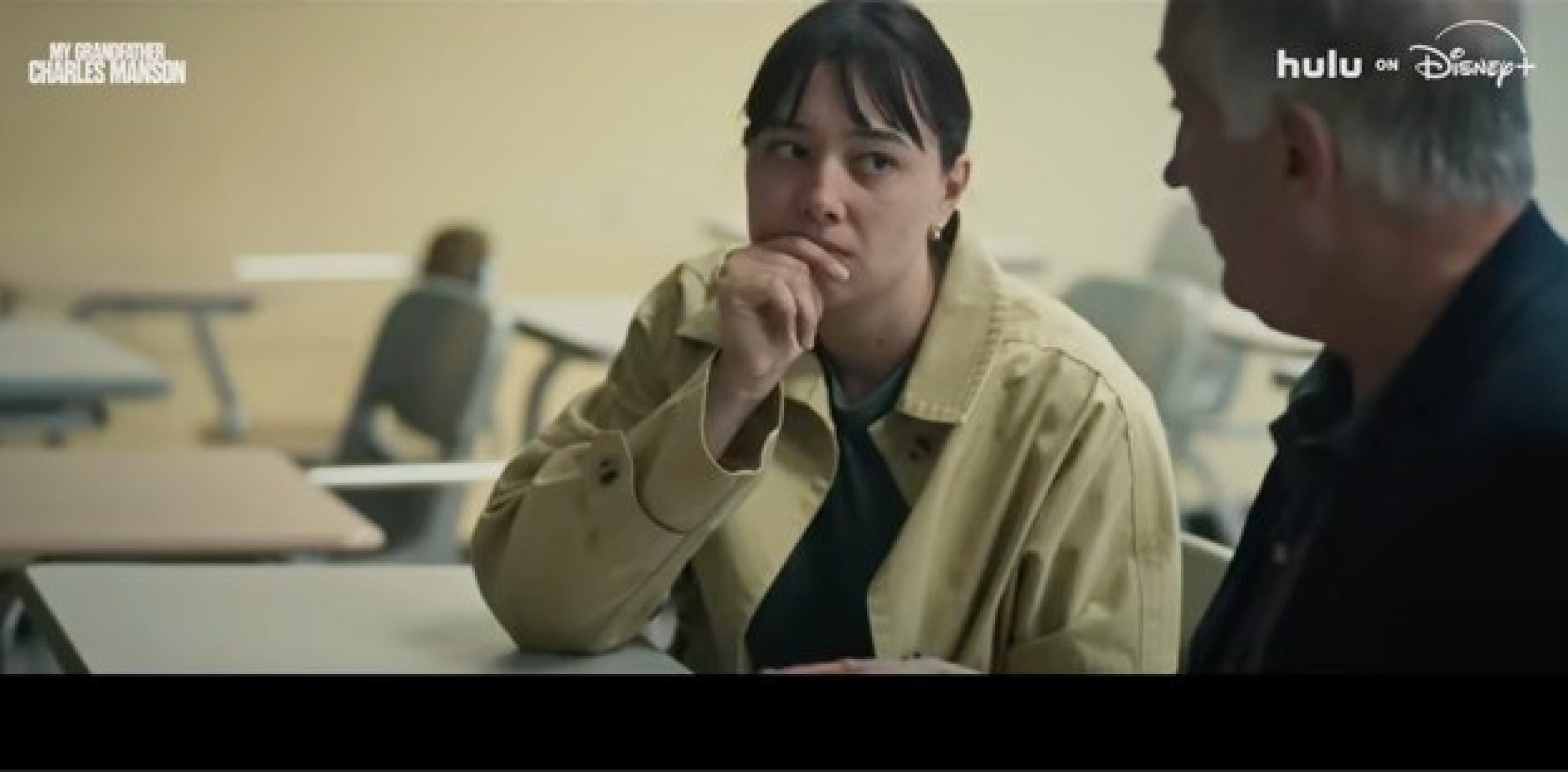
Daniel Macallair and Sophia Maddux, image taken from film preview
Institutionalization Can Intensify the Harm It Is Intended to Address
CJCJ has long challenged the assumption that removing young people from their families and communities and placing them in correctional institutions necessarily improves public safety.
Large institutions often separate young people from the relationships and supports that are essential to healthy development. Children may lose regular contact with their families, schools, neighborhoods, cultures, and trusted adults. In their place, they may encounter rigid authority, isolation, humiliation, physical violence, sexual abuse, and an institutional culture organized around control rather than care.
For young people who have already experienced neglect, abandonment, poverty, instability, or trauma, these conditions can deepen the very problems that confinement is supposed to resolve.
Institutional environments may teach children that violence is a legitimate source of authority, that vulnerability invites victimization, that relationships are inherently coercive, and that survival requires emotional detachment or aggression.
Manson’s institutional history illustrates the danger of responding to an injured and troubled child with additional injury and punishment. The institutions responsible for his rehabilitation repeatedly reinforced the conditions associated with distrust, hostility, and alienation.
CJCJ’s position is not that Manson should be viewed only as a victim. It is that he was both responsible for terrible crimes and, earlier in his life, the victim of a profoundly abusive juvenile institutional system. A complete understanding must be able to hold both realities at the same time.
Lessons Extend Beyond Charles Manson
The significance of these records extends beyond the life of a single notorious individual. Manson’s history raises broader questions about how juvenile justice systems define rehabilitation, how institutions respond to traumatized children, and how public agencies are held accountable when confinement causes additional harm.
For decades, youth in correctional institutions have reported physical abuse, sexual abuse, excessive isolation, punitive discipline, educational neglect, and the absence of meaningful emotional support. Too often, these accounts have been dismissed because the children involved were already labeled delinquent, dangerous, manipulative, or undeserving of sympathy.
The lesson is not that abusive institutionalization inevitably produces extreme violence. Rather, it is that institutions can intensify the risks they are intended to control. Systems that expose children to violence while claiming to rehabilitate them may contribute to future harm rather than prevent it.
Macallair’s analysis in the documentary reflects lessons learned through four decades of CJCJ research, advocacy, direct services, and policy reform. It also draws on his experience examining the childhood histories of people facing the death penalty, including individuals who committed devastating acts after enduring severe abuse in juvenile correctional settings.
These cases repeatedly demonstrate the importance of asking more than, “What did this person do?”
A responsible justice system must also ask:
What happened to this person as a child?
What did public institutions do to the child?
What opportunities for care and rehabilitation were missed?
What conditions contributed to the development of harmful behavior?
What reforms could prevent similar harm in the future?
Prevention Requires a Different Approach
CJCJ believes that genuine public safety requires reducing reliance on institutional confinement and investing in community-based responses that preserve young people’s connections to family, education, culture, and supportive adults.
Juvenile justice systems should use institutional placement only as a last resort and for the shortest period necessary. Systems must prohibit corporal punishment, degrading treatment, punitive isolation, and practices that expose young people to physical or psychological harm.
Young people in custody must have confidential access to independent advocates and meaningful ways to report mistreatment without retaliation. Allegations of physical and sexual abuse must be investigated promptly and independently. Institutional records must be preserved so that abuse, neglect, and systemic failure cannot be erased from public memory.
Young people also need developmentally appropriate and trauma-responsive care, stable relationships with trustworthy adults, meaningful education, family engagement, and long-term support during reentry.
Community-based programs are generally better positioned to maintain these relationships and address the underlying causes of harmful behavior without exposing children to the additional trauma of institutional life.
Institutional Accountability Is a Public-Safety Strategy
The public discussion surrounding Charles Manson has often centered on whether he was born evil. The previously unavailable juvenile records examined in My Grandfather Charles Manson make it possible to ask a more grounded and socially useful question: What happens when public institutions respond to a neglected and troubled child with further neglect, brutality, humiliation, and rejection?
Understanding Manson’s childhood does not absolve him of responsibility. It does, however, require society to confront the responsibilities of the institutions that controlled much of his early life.
Juvenile justice agencies cannot claim success simply because a young person has been confined or temporarily removed from public view. Their responsibility is to help young people develop the stability, relationships, skills, and sense of personal worth necessary to live safely in the community.
When institutions instead reproduce violence and trauma, they undermine rehabilitation and may increase the risk of future harm.
Our participation in the documentary reflects its continuing commitment to exposing institutional abuse, preserving the histories of confined young people, and promoting community-based approaches that are more humane, effective, and consistent with public safety.