The following piece is written by All Youth Are Sacred (AYAS) Narrative Organizer, Alyvia Deangelo. AYAS is a narrative power-building statewide initiative and youth fellowship. Rooted in people-power and truth-telling, AYAS builds the leadership of young people to lead the transformation of their communities. CJCJ is proud to be an anchor organization supporting AYAS with their efforts.
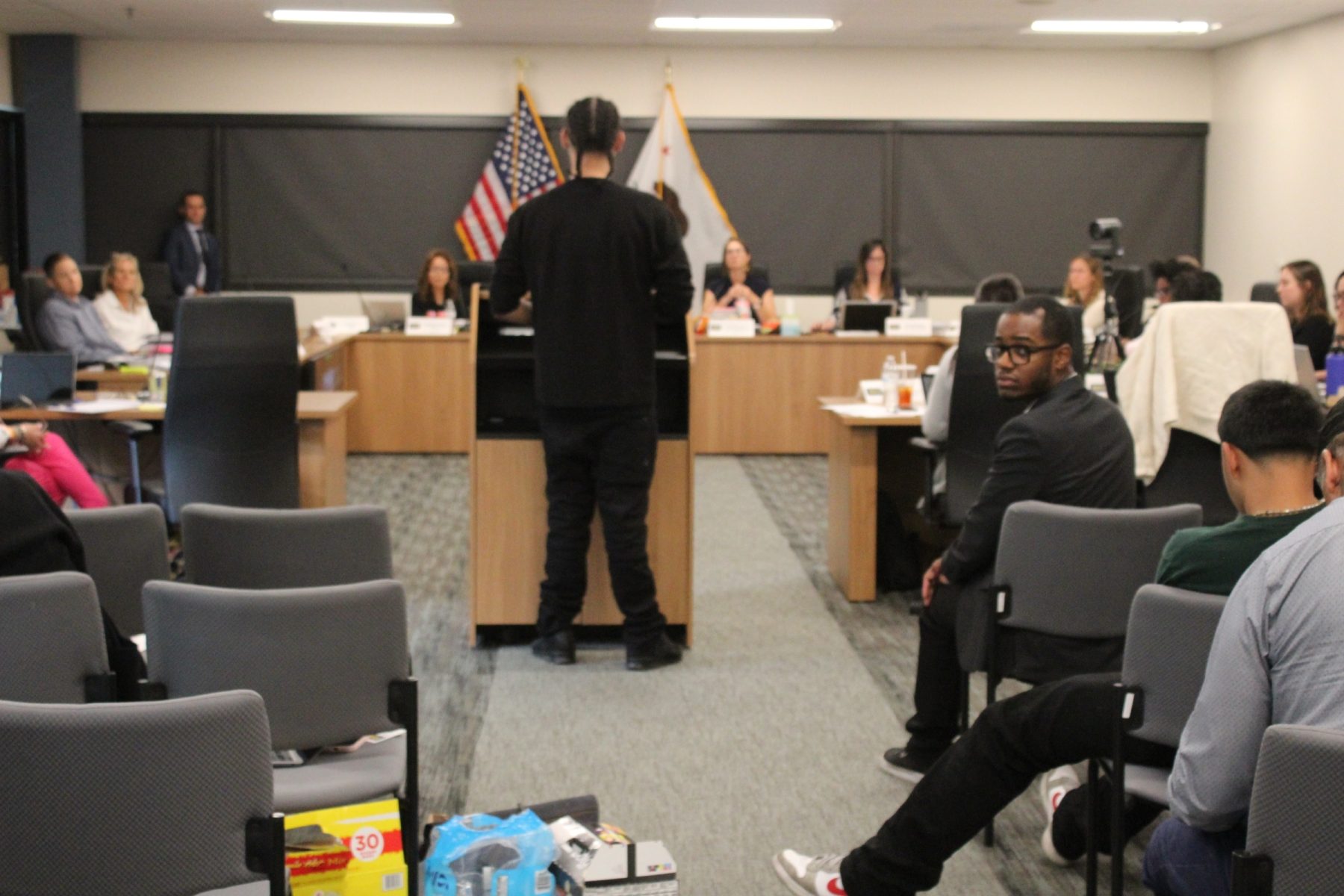
Young person speaking at a BSCC Executive Steering Committee meeting in 2025. Photo taken by CJCJ media.
Punishment Vs Healing: Rethinking Title 15 for Young People in California’s Juvenile Facitilies
Do you know what the BSCC is? Most people in the state don’t, especially in Alameda County.
The Board of State and Community Corrections, also known as BSCC, sets the standards for how juvenile halls, camps, ranches, and Secure Youth Treatment Facilities (SYTFs) operate across California. Everything from food, quality of sleep, medical care, visitation, and use of force. All of these conditions are regulated under what’s called Title 15 of California’s Code of Regulations
These regulations decide whether facilities operate like a place of healing or a place of punishment. No one can rehabilitate in a facility where youth are having a hard time accessing adequate meals, sleep, and hygiene. Youth are also vulnerable to experiencing excessive use of force, such as the use of chemical spray as a de-escalation tactic.
Right now, these regulations are being revised.
Here’s what the issue is:
The stakes of what the BSCC is deciding are high. The standards being adopted under Title 15 will also apply to SYTF’s. Instead of creating a separate set of standards for Secure Youth Treatment Facilities (SYTFs), they are basically treating them like they’re the same thing as regular juvenile halls.
But they’re not the same in practice.
Here’s the difference in real terms. Juvenile halls were originally designed for short stays, like when a young person is waiting for court or serving a short commitment. Think weeks or maybe a few months.
The issue is that many counties, including Alameda County, house SYTF units inside juvenile halls. Physically, they might look the same. But functionally, they are no longer meant for short-term holding. SYTFs were created after California closed the Division of Juvenile Justice (DJJ), the state’s youth prison system. They are intended to be long-term treatment-focused facilities for youth who otherwise would have been sent to state prison. A young person can now be committed to an SYTF for up to seven years, or up to the age of 25.
The same minimum standards for food, bedding, programming, and use of force apply to both. There’s no distinction between someone staying 60 days and someone spending most of their youth there. There are no stronger requirements to reflect long-term confinement. So let’s reiterate all of this. A building designed for temporary holding now becomes a place where a teenager might spend the next seven years, but the rules and standards still reflect short-term detention.
The regulations do not guarantee daily fresh fruits and vegetables. Youth input on meals is only required “where practicable,” which essentially means it can be ignored. Requests for vegan or vegetarian diets can be denied. Some facilities can even continue contracting to deliver food from county jails.
Food might seem like a small detail to someone on the outside, but nutrition affects mood, focus, physical health, and behavior. If a young person is expected to participate in school, therapy, and programming for years, the bare minimum should be fresh food and a real say in what they’re eating.
The current language only requires bedding to be “serviceable.” A thin mat with a raised bump can legally count as a pillow. For a facility that may hold youth for up to seven years, that standard is not enough. Rest is foundational to mental health. You cannot expect growth, reflection, and emotional regulation from young people who aren’t even sleeping comfortably.
There are many concerns we must address for long-term stays, such as higher educational standards, more mental health and therapeutic programming, stronger protections against the use of force, better living conditions, such as food, bedding, and clothing, and greater youth voice and developmental support.
If these facilities claim to be treatment-oriented, their policies need to reflect that.
There are conversations left to be had about the use of chemical spray. The date for this discussion and public opinion is yet to be confirmed. At the upcoming meeting, they will discuss two draft options: either keep chemical spray with some guardrails or fully ban it. Community members, including myself, are calling for a ban, and for good reason.
Pepper spray is painful and destabilizing. Many of the young people inside these facilities already carry deep trauma. Introducing chemical agents into a treatment setting sends a contradictory message. You cannot say you are prioritizing rehabilitation while relying on tools designed to control and punish.
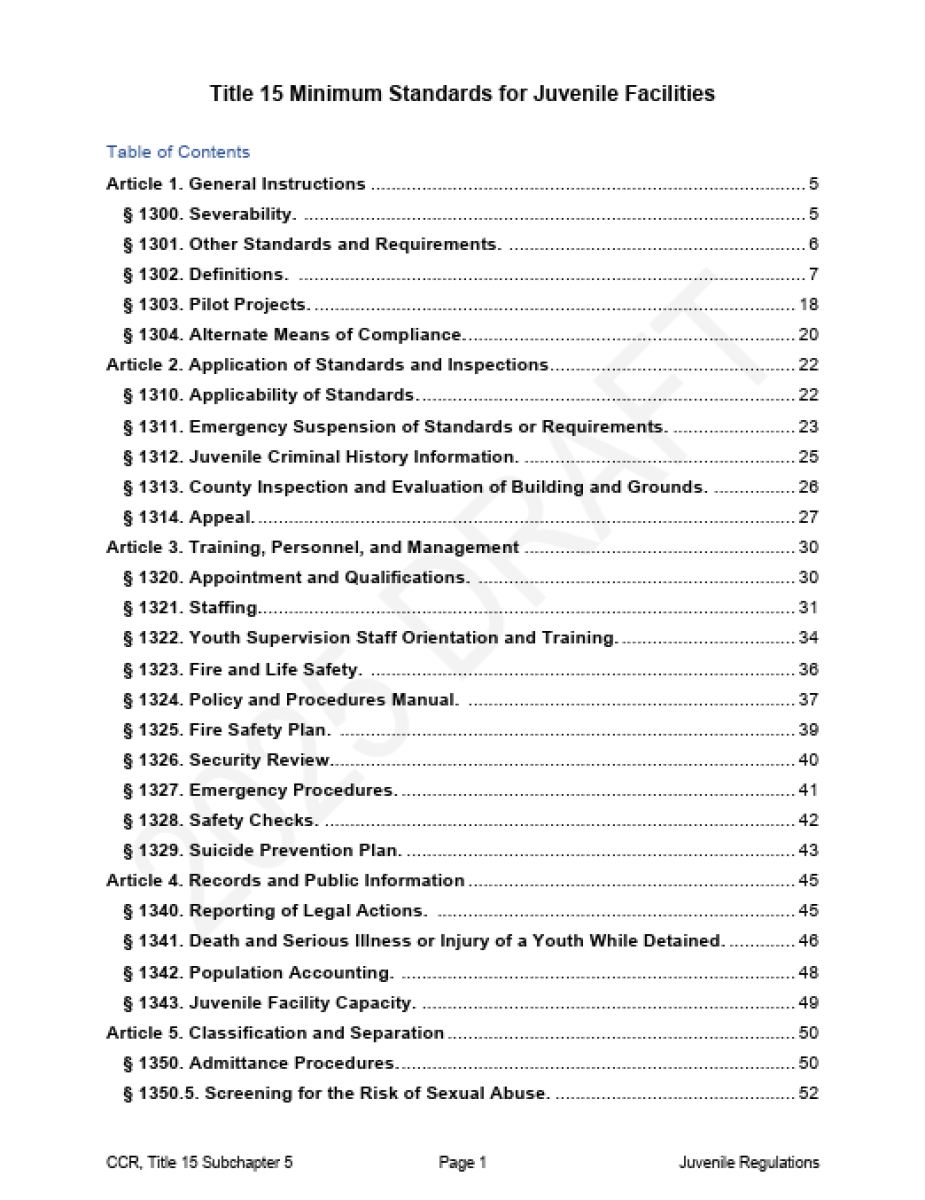
Title 15 Minimum Standards Regulations Cover Page
All of this comes back to one question. Are these facilities about punishment, or are they about healing?
If Alameda County is serious about rehabilitation, we need SYTF-specific standards that recognize the developmental and long-term needs of youth. A teenager spending six years in custody deserves conditions that reflect growth, dignity, and treatment, not temporary detention standards stretched beyond their purpose.
Title 15 might sound technical, but for young people living under it, it shapes their lives. The regulations should reflect that.
The BSCC will be holding their next ESC meeting on these revisions soon. There is a need for public comment at that meeting. Follow our social media, and AYAS to learn more about upcoming meetings that need community support and voice.
Follow us on Instagram, Facebook, and Twitter. You can find AYAS on Instagram.