Overview Cameo House & Women's Services Community Options for Youth (COY) Detention Diversion Advocacy Program (DDAP) Expert Sentencing Support Services Juvenile Collaborative Reentry Unit (JCRU) No Violence Alliance (NoVA) Technical Assistance Overview Campaign to Reinvest in Higher Education Next Generation Fellowship Legislation Transparency & Accountability California Sentencing Institute

CJCJ’s rigorous research examines national crime trends and policing practices. We help people understand what’s happening with crime and policing in their communities. We often provide statewide analysis of arrest and crime rates, alongside regional comparisons across counties around issues influencing (or impacting) incarceration. This includes analysis of law enforcement priorities, efficiency, and spending. Our work promotes transparency, accountability, and safety. Here are CJCJ’s reports on crime trends and policing issues.

For more information, contact CJCJ Communications at cjcjmedia@​cjcj.​org or (415) 6215661 x. 103.

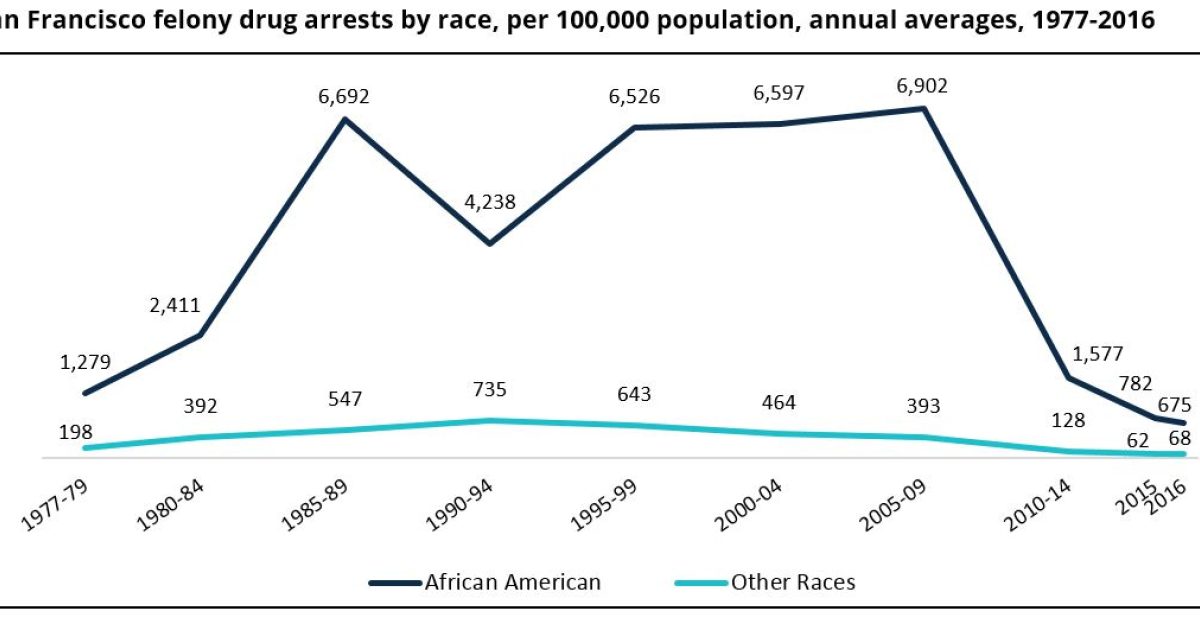
CJCJ fact sheet finds disproportionate felony drug arrests among African Americans in San Francisco continue amid times of drastic changes in the city’s drug policing & statewide drug policy reforms.

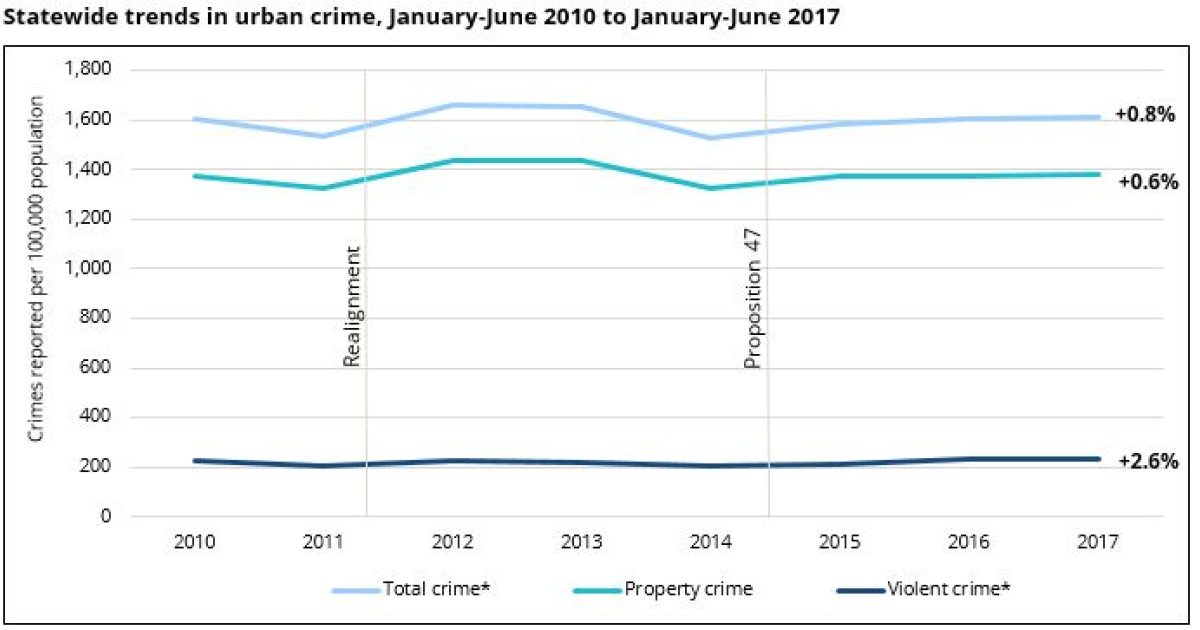
A new fact sheet from the Center on Juvenile and Criminal Justice finds that, during a period of large-scale criminal justice reform, California’s urban crime rates remained stable.

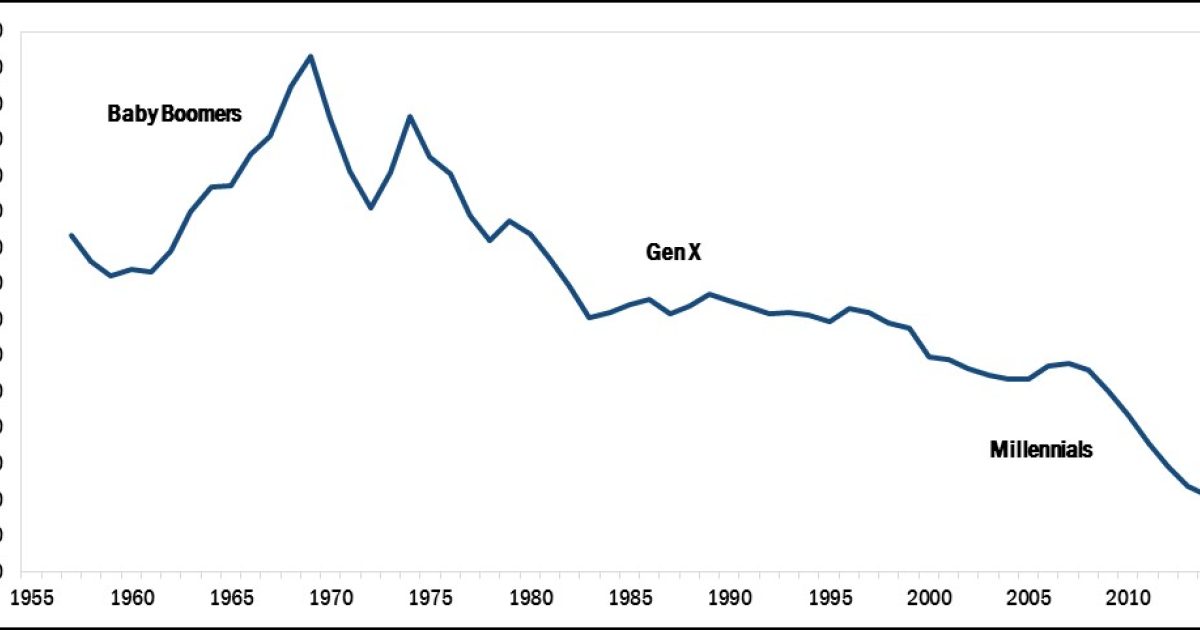
CJCJ’s new fact sheet shows youth arrests in California are at a historical low, following a decades-long pattern of decline.

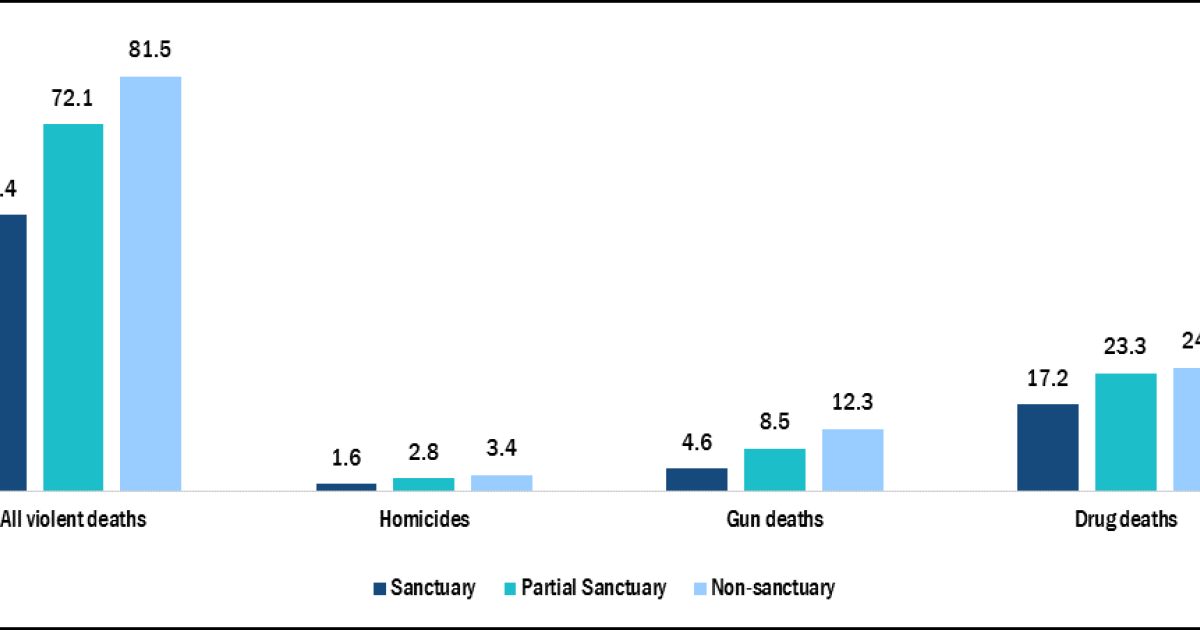
CJCJ’s new report shows sanctuary” areas are associated with enhanced safety and lower rates of deadly violence for white residents.

CJCJ’s new fact sheet shows Los Angeles County crime trends, like trends across the state, appear to be highly localized during the justice reform era.