The American prison system emerged in the early 19th century, inspired by reformers in Pennsylvania and New York. The Pennsylvania model, embodied by Eastern State Penitentiary, emphasized solitary reflection and moral reform. In contrast, New York’s Auburn system introduced congregate labor by day and isolation by night, seeking discipline through silence and work. These early philosophies that attempted to balance punishment and rehabilitation deeply influenced California’s own prison history, which would mirror America’s broader swings between incapacitation and reform.
Below you will find a historical timeline of California’s prison system.
A Historical Timeline of California’s Prisons
Ships & Auburn Style Penitentiary
- 1850 — September 9, California became the 31st state
- 1851- Convicted men and women were kept aboard ships. The Waban was one of the most famous, purchased by San Francisco Sheriff John Coffee “Jack” Hays
- 1851- California legislature calls for the establishment of the state’s first prison using a convict lease system (or system of profit-driven private prison management) that rejects the congregate penitentiary model or Auburn system that was practiced in the Eastern States.
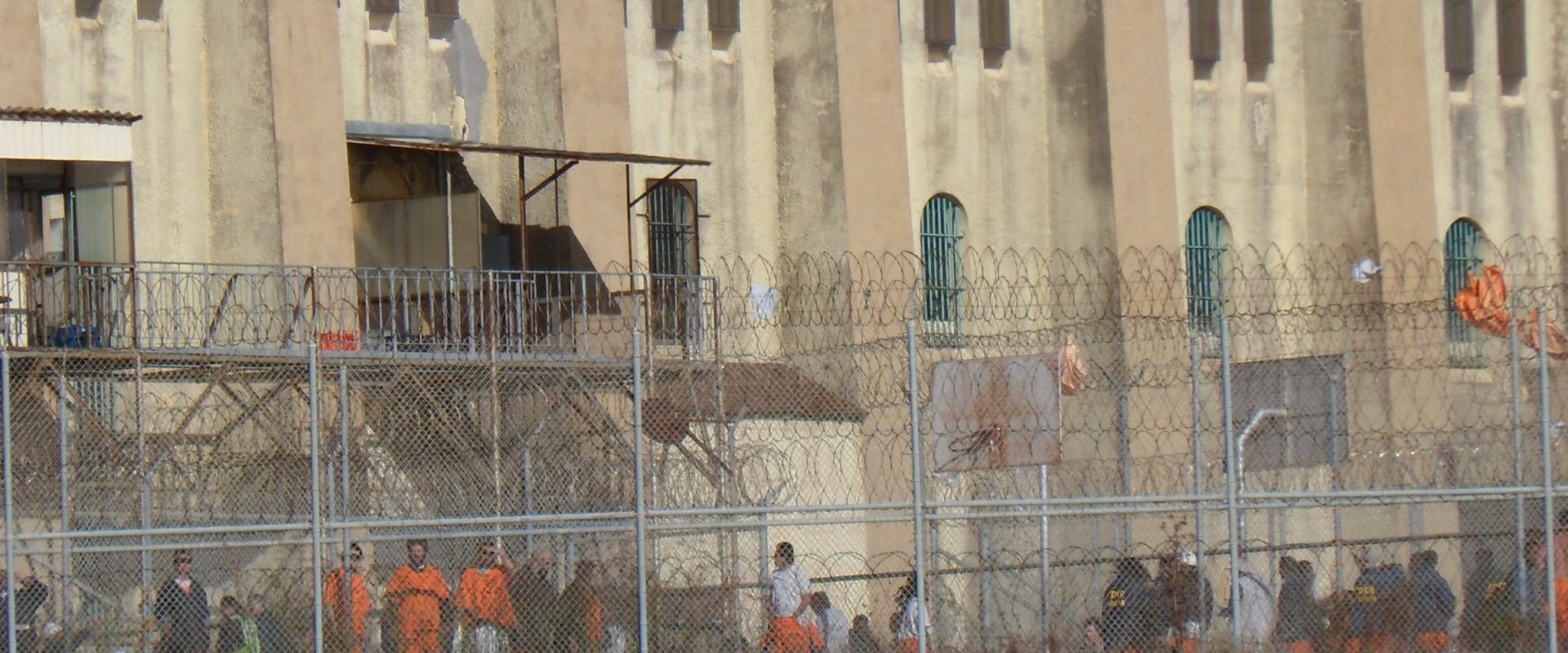
- 1852- San Quentin State Prison was built on a site known as Point San Quentin in Marin County. Built under the convict lease system system, prisoners were housed in damp, squalid and overcrowded conditions on the prison ship Waban, during construction.
- 1855– Convict lease system is abolished following public outcry over mismanagement, inhumane conditions and frequent escapes. A three person Board of Trustees that included the Lieutenant Governor, is appointed to assume control.
- 1856 — Convict lease system temporarily reinstated on allegations that the Board of Trustees mismanaged and overspent the legislature’s budget allocations, while attempting to address horrific prison conditions.
- 1857 — California legislature authorizes the building of a second state prison.
- 1858 — Legislature permanently abolishes convict lease system and mandates that the state assume full responsibility for prison management.
- 1860s - Reformatory prison movement emerges in the Eastern United States under the leadership of prison reformers Enoch Wine and Theodore Dwight.
- 1870 — Representatives of the California Prison Commission attend the reformatory prison conference in Cincinnati Ohio and embrace ideals for new reformative prison design, classification, indeterminate sentencing, and discretionary parole.
- 1870 – 1877 — Debate over design of second state prison and whether the state should implement an Auburn style penitentiary model or establish a reformatory prison.
- 1879 — Convict labor law passed forbidding the manufacture and sale on the open market of products produced by prison labor. Later legislation decreed that products produced through prison labor in California could only be used for state agencies.
- 1880- Folsom State Prison opens as an Auburn style prison rejecting efforts by advocacy groups such as the California Prison Commission to establish a reformatory style facility.
- 1900 — Women’s Christian Temperance Union becomes involved in California prison issues over the sexual abuse of women prisoners housed at San Quentin.
- 1903 — Legislature launches investigation over allegations of the cruel treatment of people incarcerated in San Quentin and severe crowding throughout the system.
- 1903 — Warden John Thompson argues for the expanded use of extreme and horrific methods for controlling incarcerated people including the expanded use of the notorious full-body strait jacket.
- 1916 — State adopts indeterminate sentencing.
- 1933- California Institution for Women established, the state’s first women’s prison.
- 1941- California Institution for Men established as the state’s first reformatory prison. Noted prison reformer Kenyon Scudder appointed as first director.
- 1942- Earl Warren elected Governor with a promise to reform troubled youth and adult prison systems
- 1944- The Legislature established the California Department of Corrections under the Prison Reorganization Act. Richard McGee was appointed director. McGee, a trained penologist, who advocated for a medical-rehabilitation model of prison management based on better assessment and specialized prisons.
- 1944 – 1960 Rehabilitation era: State law allowed time to be added to people’s sentences if the Adult Authority (parole board) felt they needed additional treatment.
- 1959 — Caryle Chessman, author of Cell 2455 Death Row, is executed despite passage of a law by the California legislature that rendered his crime no longer a capital offense.
- 1944 – 1960 Prison System Turmoil and the Decline of Rehabilitation
- 1966- George Jackson & W. L. Nolen co-founded Black Guerrilla Family (pg 12 – 13) https://sk.sagepub.com/ency/edvol/violentcrime/chpt/black-guerrilla-family
- 1967- Prisoner’s Rights Union established by San Francisco State professor John Irwin to pursue prison reform by organizing families of those incarcerated. Irwin would also go on to found Project Rebound for students at state colleges coming out of prison and into college.
- 1957 – 1970 — Growth of race and ethnic-based prison gangs such as the Black Guerrilla Family, Mexican Mafia, Nuestra Familia, Aryan Brotherhood, Nazi Low Riders.
Prison Riots & Strikes
- 1969- Race Riots in San Quentin: Racial tension between Black and white incarcerated people in the prison walls that lead to a race war in San Quentin with violence such as murder and stabbings.
- 1969- San Quentin Hunger Strike: Black incarcerated people at San Quentin held a non-violent hunger strike by throwing out their food. This was done so that Wardon Jacobs could improve the prison conditions (i.e., hiring more Black prison guards).
- 1970- Folsom prison strike: Incarcerated people at Folsom prison went on a 19-day strike in hopes to fix the brutal prison system at the time. Regardless of race, color and creed, inmates created a manifesto and bill of rights for how they expect to be treated.
Major Events of the 1960’s and 1970’s
- The case of Caryl Chessman
- The rise of race-based prison gangs
- Civil rights movement
- Establishment of the Black Muslim prison group at San Quentin
- Black Panther Party and the Black Guerrilla family
- San Quentin race riot of 1967
- Use of the prison strike
- General prison strike at San Quentin in 1968
- Formation of the Prisoners Rights Union
1970’s and The Origins of Mass Incarceration
- 1970- W.L Nolen and two other Black men were shot dead by a White guard in Soledad Prison during a fight between White and Black incarcerated men; many incarcerated people at the time believed it was orchestrated by prison staff.
- 1970- Soledad guard John Mills is killed in retaliatory assault. George Jackson and two others (known as the Soledad Brothers) are charged with murder and transferred to San Quentin for trial.
- 1970 — George Jackson’s book Soldedad Brother published. The book, a best seller, describes violence inside the prison and the racist attitudes of the guards.
- 1970- Jonathan Jackson, 17-year-old brother of George Jackson, dies in a shootout at the Marin County courthouse in an attempt to free his brother by seizing hostages.
- 1971- President Richard Nixon launches the war on drugs targeting Black people and “Hippies”
- 1971- Keldgord Report called for restructuring of corrections in California, and greater community involvement.
- 1971- While incarcerated at San Quentin, George Jackson is killed while leading an uprising and escape attempt. Three guards and two White incarcerated people were also killed.
- Racial divisions and White backlash across the United States fuel drive for harsher criminal justice policies and increased imprisonment.
- 1972- Opposition to indeterminate sentencing and prison-based rehabilitation grows among liberals and conservatives.
- 1974- The Martison Report. The Martinson report, which became known as the “nothing works” study , concluded that current research did not show rehabilitation programs were effective. Publication of the report further diminished support for rehabilitation as a primary goal of prison policy. The decline of rehabilitation was seen throughout the 1970s and 1980s where government funding shifted primarily towards incapacitation, in the form of tougher sentencing and increased incarceration.
- 1977- Determinate Sentencing Act (PC 1170) signed into law by Governor Jerry Brown. This model, a return to 19th century determinate sentencing practice, established fixed periods of imprisonment for specific crimes. Under the new sentencing law punishment and incapacitation replaced rehabilitation as the primary goals of sentencing.
1980’s Prison Boom
- 1980- Era of mass incarceration in California begins as general incapacitation theory replaced rehabilitation as dominant sentencing policy.
- 1981- First prison bond passed by voters launches the largest prison building effort in state history.1982- California voters passed Prop 8 creating the Victims’ Bill of Rights — which promoted retributive sentencing.
- 1982- Selective incapacitation study published by RAND asserting that sentencing policy should focus of small number of chronic habitual offenders1988- The Step Act: California enacted the Street Terrorism Enforcement and Prevention (STEP) Act in response to fears of increasing street gang activity.
- The law, which was created in Los Angeles, aimed to make any type of gang-related conduct illegal and put in harsher penalties for crimes when they were allegedly gang-related. Terrorism task forces that were once focused on Russian spies redirected their training to target “street gangs”. The law increased police arrests in low income urban communities of color and worsened disproportionate prison sentencing for minority populations.
- The STEP Act sped through the legislature without significant study or debate. Everybody except one legislator, Bill Lockyer, voted for it. Lockyer voted no because he feared it would make people “guilty by association.” Lockyer later became the Attorney General of CA and vigorously enforced the STEP Act against youth.1990- Governor’s Blue Ribbon Commission On Inmate Population Management Report outlined the dangers of prison overcrowding and found that the California criminal justice system was out of balance. In its recommendations contained in the report it highlighted the importance of having alternative sentencing punishment options that reduce overcrowding and do not compromise public safety. CJCJ’s Vincent Schiraldi served on the commission.
- 1990- Coleman v. Newsom lawsuit filed alleging the Dept’ of Corrections failure to provide access to mental health services to incarcerated people resulting “…exacerbation of illness and patient suffering.”
- 1994- Three Strikes Initiative is passed by voters. The law further expanded the prison population by imposing mandatory life sentences (25-to-life) for anyone with prior convictions for two or more serious or violent felonies. The law also doubled the sentence for anyone with one prior conviction for a serious or violent felony.
- 1995- Madrid v Gomez. civil rights class action lawsuit which challenged the conditions of confinement at Pelican Bay State Prison in California. The court ruled that California Department of Corrections employed abusive practices including “…the unnecessary and excessively violent cell-extractions, the hog-tying of prisoners, the caging of naked prisoners outside for long periods of time in cold and rainy weather and the staff beatings of prisoners.”
- 2000- Proposition 36: Substance Abuse and Crime Prevention Act is passed by voters requiring courts to impose treatment for drug addicts in lieu of incarceration. First law in decades that reduces prison sentencing for drug offenders.
- 2000- Proposition 21: Established the “direct file” process, allowing prosecutors rather than judges to decide whether certain juveniles accused of serious crimes would be tried in adult court, significantly expanding prosecutorial discretion in juvenile prosecutions. This measure aimed to impose stricter penalties for juvenile offenders, particularly for violent and gang-related crimes.2001- Plata v California Lawsuit against California Dept. of Corrections for failure to provide adequate medical services that included “…failure to “properly care for and treat the prisoners in [their] custody … caused widespread harm, including severe and unnecessary pain, injury and death…”
2000’s Peak Prison Population & Overcrowding
- 2005- Governor Schwarzenegger declares a state of emergency in response to prison crowding and orders a restructuring of the state’s corrections system.
- 2006- California prison population reaches 173,000
- 2007-Panel of the three Federal judges in the Plata and Coleman case decries the overcrowding and unconstitutional conditions in the state’s prison system and orders the state to reduce the prison population to 137.5% or prison design capacity.
- 2010- Little Hoover Commission (2010)- conducts an inquiry into prison conditions and issues a report highlighting the dangers of prison overcrowding and urges immediate sentencing reform. CJCJ’s Daniel Macallair served as an advisor.
- 2010 — California Correctional Peace Officers Association and the Center on Juvenile and Criminal Justice co-sponsor a series of planning meetings on sentencing reform (CJCJ, 2011).
- 2011 — United State Supreme Court orders California to reduce its prison population in order to come into compliance with constitutional requirements.
- 2011- Governor Brown signs the Public Safety Realignment Initiative (Senate Bill 109 ) In response to the United State Supreme Court mandated prison population reductions. This legislation reduced the prison population through sentencing reform by restricting the type of offenders who could be sentenced to state prison. The legislation reflected many of the recommendations endorsed by the CCPOA and CJCJ advisory panel.
Reform Era, Back to Rehabilitation
- 2014- Proposition 47- sentencing reform that recategorized many non-violent offenses as misdemeanors.
- 2016- Proposition 57 — sentencing reform that allows earlier parole consideration for nonviolent felonies, ends direct file in juvenile prosecution, and authorizes increased sentence credits for rehabilitation, good behavior, and education.
- 2016- Proposition 64- The Adult Use of Marijuana Act (AUMA) also known as Control, Regulate and Tax Adult Use of Marijuana Act which legalized cannabis use in California.
- 2017- CJCJs Dan Macallair testifies at the California Assembly Budget Subcommittee Number 5: Public Safety. Macallair recommended the state “Create a state-wide sentencing oversight committee to monitor the sentencing practices of all 58 counties. Establish a ceiling on prison commitment rates that approximates the current state average for all 58 counties. Any county that exceeds the average state rate would be charged a percentage of the state costs for housing that person in the state prison.”
- 2021- STEP Forward Act: AB 333, also called The STEP Forward Act, targets the damage that gang enhancements cause to families and communities throughout California. It seeks to reduce the racial imbalance of enhancements in Penal Code (PC) 186.22 by adding Section 1109.
- 2023- Prison population led Governor Newsom to close three prisons — Deuel Vocational Institution in Tracy in 2021, California Correctional Center in Susanville in 2023, and Chuckawalla State Prison in Blythe, scheduled to close in March 2025.
- 2024- Prison population declines to 91,0000 — the lowest in decades.
- 2024- Legislative Analyst calls for the closing five additional prisons in response to continued inmate population decline and lower crime rates.